









Affiliate Terms & Conditions
1. Scope of the Agreement
These Terms and Conditions (the “Terms and Conditions” or the "Agreement") govern the relationship between Herb Pharm ("Company" or “Us”) and the affiliate creator ("Affiliate" or “You”) who receives product and/or monetary commissions from the Company for promotional purposes. This Agreement outlines the terms under which the Affiliate will promote the Company's products on their social media platforms.
2. Affiliate Obligations
Promotion: The Affiliate agrees to create and post content featuring the Company's products on their social media platforms, including but not limited to Instagram, Facebook, TikTok, SnapChat, and Twitter. Affiliate agrees to comply at all times with the posted policies, guidelines, and terms of use on any platform on which You post content on behalf of Herb Pharm, understanding that any these platforms' disclosure requirements about your connection to us do not necessarily satisfy FTC disclosure requirements.
Frequency: The Affiliate shall post content as agreed upon with the Company.
Disclosure: Affiliate must clearly disclose their relationship with Company in compliance with applicable laws and regulations, including the Federal Trade Commission (FTC) guidelines.
Authenticity: Affiliate agrees to provide honest and genuine opinions about the products and not to make any false or misleading claims. Affiliate shall post factual statements about Herb Pharm and our products.
Social Media Policy Compliance: Affiliate must read, review, and comply with the Herb Pharm Social Media Endorsement Policy, as updated from time to time.
3. Content Guidelines
Brand Representation: Affiliate shall ensure that all content aligns with the Company's brand image and values.
Quality Standards: Content must be of high quality, visually appealing, and professionally presented.
FTC Compliance: All posts must comply with the Federal Trade Commission's (the "FTC") Guides Concerning Endorsements and Testimonials ("Endorsement Guides"). You represent and warrant that you have reviewed these guides prior to accepting Company product.
Affiliate will clearly and conspicuously disclose the "material connection" to Us, making it clear that You have received products or other incentives (such as a sweepstakes entry).
You must place the disclosure in plain sight in close proximity to any audio or visual communications that You make about Us, our brands, and our products and it must be unavoidable.
You may not bury the disclosure in a link or place the disclosure in a string of hashtags or other disclosures. We require this disclosure regardless of any space limitations of the platform, where You can use hashtags for the disclosure (like #ad or #sponsored).
Prohibited Content: Affiliate shall not post content that is offensive, defamatory, or otherwise harmful to the Company's reputation.
4. Intellectual Property Rights
Ownership: The Company retains all rights, title, and interest in its trademarks, logos, and other intellectual property.
License: Affiliate grants Company a non-exclusive, royalty-free, worldwide license to use, reproduce, and distribute the content created under this Agreement for promotional and all other purposes.
5. Confidentiality
Affiliate agrees to keep confidential any proprietary information disclosed by Company, including but not limited to product details, marketing strategies, and business operations.
6. Termination
Termination by Company: Company may terminate this Agreement at any time with or without cause by providing written notice to the Affiliate, in which case Affiliate agrees to immediate stop all posting and remove current posts regarding Company.
Termination by Affiliate: Affiliate may terminate this Agreement by providing 15 days' written notice to the Company. Affiliate shall cease all promotional activities related to the Company's products and return any product received and confidential information.
7. Disclaimers and Limitations of Liability
Compensation: Affiliate acknowledges that they are compensated with products and/or monetary payment via commission for product sales.
Limitation of Liability: Company shall not be liable for any indirect, incidental, or consequential damages arising from the Affiliate participation in this Agreement.
Disclaimer of Warranties: Company makes no representations or warranties regarding the products provided, including their fitness for a particular purpose.
8. Miscellaneous
Governing Law: These Terms and Conditions shall be governed by and construed in accordance with the laws of Oregon, in the United States of America.
Entire Agreement: This Agreement constitutes the entire understanding between the parties and supersedes all prior agreements or understandings, whether written or oral.
Acknowledgment: By participating in the promotional activities outlined herein, Affiliate acknowledges that they have read, understood, and agree to be bound by these Terms and Conditions.
Updated: 05/13/2026
Social Media Endorsement Policy
Purpose and Scope
Herb Pharm (the “Company”) is committed to transparency and honesty in all of its advertising messages and promotional communications with consumers. One of the most common ways to advertise and market products and services in social media is to use third party endorsements. Like other types of advertising, endorsements must be truthful and not misleading. Consumers must understand when a social media endorsement is sponsored by Us.
This Policy applies to all agencies, independent contractors, speakers, writers, bloggers, talent, influencers, creators, and any other individual or entity engaged in promotional communications on behalf of Herb Pharm on social media or other non-traditional media. This Policy also applies to Herb Pharm employees and agencies who manage the above listed individuals and entities and employees who promote this Company and its products on their personal social media accounts. For countries outside the US, Herb Pharm considers many of the requirements in this Policy to be best practices for engaging in social media.
Defining an Endorser Covered by This Policy
An individual or entity communicating on social media or other non-traditional media is covered by this Policy if its promotional messages about Herb Pharm or our products are sponsored by Us ("Sponsored Endorser"). If the individual or entity is acting independently, it is not subject to this Policy.
A message is sponsored by Us if We have a material connection with the individual or entity and a significant minority of the audience for the endorsement does not understand or expect the connection. A material connection is a tie to Us which if known to consumers might make consumers question the credibility of the endorser or materially affect the weight consumers place on the endorsement. It puts the endorser's independence in question. For example, Herb Pharm creates a material connection if We do any of the following either directly or through an advertising agency, public relations firm, or other third party:
- Hire an agency to blog, post, or serve as a community manager on our behalf (both the agency and its employees then become Sponsored Endorsers).
- Enter into an agreement with an individual to blog or post.
- Pay an individual to blog or post.
- Provide free accommodations or travel to an individual for a company event or experience.
- Provide discounts, sweepstakes entries, or other incentives to an individual.
- Provide an individual with free prizes for giveaways or sweepstakes on social media platforms.
- Provide an individual with free samples to review on social media platforms.
- Provide an individual with free samples after that person has blogged or posted independently, especially if providing the free samples creates the expectation of additional free samples (which makes the individual a Sponsored Endorser going forward, not retroactively).
- Provide publicity opportunities (like a television appearance) or early access to products or services.
- Engage affiliate marketers to advertise, blog, endorse, or sell on our behalf (making the affiliates and their employees Sponsored Endorsers).
Other Methods
Herb Pharm can turn our everyday consumers into Sponsored Endorsers by:
- Establishing a consumer marketing program that gives members free products, coupons, discounts, or other benefits.
- Providing incentives to consumers to review our products.
- Requiring sweepstakes or contest participants to post photos of our products/brand as part of their entries.
Animal Owners
Providing any incentives or benefits to a "pet influencer" through their pet owner also qualifies as a Sponsored Endorser.
This list, though comprehensive, is not exhaustive. Check with legal counsel for any questions about whether Herb Pharm behavior or actions has created or will create a material connection with a third party.
Note that Herb Pharm employees have a material connection to Herb Pharm so are also considered to be Sponsored Endorsers. Employee behavior as to use of social media is addressed more comprehensively in a separate employee policy, Herb Pharm Social Media Guidelines and the Herb Pharm Employee Handbook. However, this Policy requires employees to clearly and conspicuously disclose their connection to Us when promoting Herb Pharm or our products on social media. Recommendations and requirements for clear employee disclosure language are listed in Appendix A to this Policy. In addition, investors in Herb Pharm may also be considered Sponsored Endorsers which would require them to disclose their material connection in addition to any Securities and Exchange Commission requirements.
In addition, if we use a virtual influencer to promote our products, the endorsements by the virtual influencer are covered by this Policy. When using a virtual endorser to promote Our products, We (The Company and the Sponsored Endorser) must ensure the public understands that:
- The communications from the virtual influencer are advertisements.
- The influencer is virtual and not real.
- The virtual influencer does not have the ability to try or test out a real product.
Sponsored Endorsers Must Comply with Our Standards of Conduct
With respect to promotional statements or other claims made on social media platforms and on other non-traditional media about Herb Pharm and Our products, Sponsored Endorsers must adhere to the following principles:
Sponsored Endorsers may only make statements that:
- reflect their honest beliefs, opinions, or experiences; and
- are transparent about their connection to us.
Sponsored Endorsers may not:
- make deceptive or misleading claims to consumers about Our products, or Our competitors' products;
- make any claims about Our products, or Our competitors' products, that are not backed up by evidence;
- disclose any of Our confidential information;
- engage in any communication that is defamatory or infringes upon the intellectual property, privacy, or publicity rights of others;
- offer for sale or solicit products on behalf of Herb Pharm;
- make offensive comments that have the purpose or effect of creating an intimidating or hostile environment;
- use ethnic slurs, personal insults, obscenity, or other offensive language; and
- make any comments or post any content that in any way promotes unsafe activities that could lead to an unsafe situation involving Herb Pharm's consumers or other individuals.
ADDITIONAL COMPANY STANDARDS
Sponsored Endorsers must adhere to:
- the posted guidelines and terms of use on any site or platform on which they post content on behalf of Herb Pharm; and
- any additional guidelines provided by Herb Pharm, such as product-specific program requirements.
Sponsored Endorsers must also refrain from creating fake followers or engagement on social media platforms, such as:
- Buying followers.
- Using bots to grow audience size by automating account creation, following, commenting, and liking.
Disclosing a Material Connection Clearly and Conspicuously
When posting about Our products, Herb Pharm requires Sponsored Endorsers to disclose their material connection to us clearly and conspicuously. If a Sponsored Endorser has multiple material connections to Us, the full extent should be disclosed.
This Policy does not require specific language to disclose a material connection, but Sponsored Endorsers must communicate the material connection effectively so that consumers:
- Can easily find it.
- Can easily understand it.
- Obtain sufficient information from it to make a judgment about the credibility of the endorsement.
To ensure a disclosure is clear and conspicuous, appropriate consideration should be given to the limitations and nature of the platform being used. Sponsored Endorsers must:
Ensure the disclosure is:
- well-placed so it can be easily noticed; and
- prominent so it can be easily read.
Avoid burying the disclosure:
- in a bio;
- below the fold;
- behind a "more" button or another link, like a "Legal" or "Disclosure" button; or
- among a series of hashtags, other disclosures, or general copy.
- Avoid using a string of words as disclosure (without capital letters or spaces to make each word easily identifiable) that make it difficult to understand or recognize as a material connection disclosure.
Make online disclosures unavoidable. Make disclosures in the same format as the triggering claim (so if the claim is made both visually and verbally, the disclosure must be made in both formats too).
Identify Herb Pharm or the brand as the sponsor when it is unclear but material to consumers in a post that We are the sponsor. This issue arises particularly when an influencer also highlights another entity or an event in a post.
Superimpose a material connection disclosure on images, including on Snapchat and Instagram Stories. The disclosure should be:
- easy to notice and read in the time that followers have to look at the image; and
- well-contrasted against the image.
In video posts, including podcasts:
- place the disclosure both within the video itself, and in the description of the video; and
- display the disclosure long enough for a consumer to be able to read and understand it.
In Instagram posts, disclose a material connection before the "More" button and superimpose it on the image if a significant minority of viewers are likely to not see the disclosure in the description.
For a live stream, repeat the disclosure as needed to ensure that consumers see it or keep it posted throughout the live stream.
If the posts are part of an online chat or tweets, or a similar thread, make the disclosure clearly in the first entry into the conversation thread, and then add to subsequent entries at 3-10 entry intervals depending on the media and the length of the thread.
Disclose the material connection even when just tagging Our brand/products in a photo.
For a television or radio talk show appearance, disclose the material connection verbally when promoting Our products/brand.
When the target audience may be more vulnerable (for example, children or the elderly), We must assess whether the disclosure is clear and conspicuous from the perspective of the target audience. In addition, We should take special care when using endorsements in advertising directed towards children because practices that are acceptable for adult audiences may not be acceptable for child audiences.
We should avoid encouraging endorsements that use features that do not allow for clear and conspicuous disclosures, such as likes, Pins, or shares, if the absence of that disclosure is likely to be misleading.
If We ask consumers to promote Our products/brand on social media in exchange for the chance to win a prize, the official rules must require entrants to disclose the fact that the entrant's post is an entry into a contest or sweepstakes. Whether the products/brand are promoted in a text, a hashtag, a photo, or a video, the entry post must include some clear and conspicuous indicator that the consumer has received an entry in a promotion in exchange for the post. For example, the official rules could require entrants to use a specific hashtag disclosing that the post is a sweepstakes or contest entry. Failure to make the disclosure must disqualify the entry.
If We run a social media endorsement campaign outside the US and the product/brand is sold in the US, We must require a disclosure if the posts are likely to be seen by and to affect US consumers.
A social media platform may have a required tool or feature for paid endorsements. Although these tools or features must be used to comply with the platform's rules, they should not be relied on alone to meet FTC disclosure requirements.
What We Must Provide to Sponsored Endorsers
When Herb Pharm engages a Sponsored Endorser, either directly or through a service provider, the Sponsored Endorser must sign either:
- An agreement outlining the business terms of the arrangement and the guidelines set forth in this Policy.
- A statement agreeing to comply with the guidelines set forth in this Policy.
Herb Pharm must also provide Sponsored Endorsers with:
- Message points, facts sheets, or other similar talking points about the [products/services] at issue, that do not necessarily prescribe what the endorser should say, but include:
- a list of claims about the Company's product that the company has substantiated; and
- guidance on what the Sponsored Endorser cannot say about the Company's products.
-
Links to or copies of FTC guidance on endorsements (which can be found on the FTC's website),
specifically:
- Guides Concerning the Use of Endorsements and Testimonials in Advertising (Endorsement Guides).
- The FTC's Endorsement Guides: What People are Asking.
- The Do's and Don'ts for Social Media Influencers.
- Disclosures 101 for Social Media Influencers, and its associated video: Do you endorse things on social media?
- General guidance on the FTC Endorsement Guides and encouragement to educate themselves on
all FTC
endorsement guidance. For example, inform Sponsored Endorsers that:
- they should not assume their followers know about their connection to Us;
- opinions should be based on their own honest beliefs and experiences;
- they should refrain from making statements about Our products that are measurable, other than those on the fact sheets We have provided; and
- any comparisons must be based on actual, personal experiences with all products being compared because they should not extrapolate beyond personal experiences. (For example, a Sponsored Endorser could say "I liked the Herb Pharm product the best of the products I tried," but should not say "No other product tastes better than the Herb Pharm product" because the endorser probably has not tried all the products in Our category.)
- Guidance on the material connection disclosure language and placement We expect.
We should advise Sponsored Endorsers that We plan to monitor their posts to ensure the accuracy of any measurable claims they make about Herb Pharm products and that they have adequately disclosed their material connection to Us.
Monitoring Sponsored Endorsers and Pre-Approval of Posts
Employees responsible for Sponsored Endorser relationships or campaigns must regularly monitor the postings of Sponsored Endorsers, either directly or through their agencies. Employees must also ensure that:
- Every Sponsored Endorser campaign or relationship has monitoring responsibilities clearly identified. If one of Our service providers is to conduct the monitoring:
- it must be given appropriate training on this Policy; and
- its contract or statement of work must make it responsible and liable for monitoring.
- Sponsored Endorsers:
- always disclose their material connection to Herb Pharm in a clear and conspicuous manner;
- are not making unsubstantiated claims about Our products; and
- are otherwise complying with this Policy and any other guidance We have provided.
Contest and sweepstakes entries that promote Our products /brands in social media are included in the monitoring, and entries that fail to use a material connection disclosure are disqualified.
Monitoring of a Sponsored Endorser continues for a minimum of 4 weeks past the end of our relationship (for example, the contract expiration date or the last time We sent free samples). For longer campaigns or relationships, it may be necessary to monitor for more than 12 weeks.
When a Sponsored Endorser Fails to Comply with This Policy
Herb Pharm must correct any failure to disclose a material connection or communication of any unsubstantiated claims by a Sponsored Endorser. The employee team responsible for the Sponsored Endorser must take the following steps:
- If an agency or other third party manages or is otherwise involved with the Sponsored Endorser relationship, alert the third party to the issue.
- Consult with legal counsel and the Regulatory and Compliance department to determine whether a correction is needed, and how best to make it.
- If needed, require the Sponsored Endorser to make the correction or post the correction on the Sponsored Endorser's post or page directly.
-
Determine if it is necessary to:
- withhold payment from the Sponsored Endorser; or
- terminate the relationship with the Sponsored Endorser.
All written agreements with Sponsored Endorsers must give Us the right to take any of these corrective measures for noncompliance with this Policy.
Herb Pharm must keep records (or have the responsible agency keep records) of the corrective measures taken to address failures by Sponsored Endorsers to comply with this Policy.
Training on This Policy
All employees and Sponsored Endorsers must have knowledge of this Policy. The Regulatory and Compliance Department is responsible for providing the necessary training on this Policy. The following employees, individuals, functions, and third parties are required to receive in-depth training on this Policy:
- Herb Pharm marketers.
- Corporate Communications employees.
- Regulatory and Compliance
- Creative agencies and other third-party service providers who manage relationships with any of our Sponsored Endorsers. Employees responsible for hiring or managing these third parties must ensure they receive the training.
- Sponsored Endorsers.
Contact your point person or the Quality Department (QMTarchive@herb-pharm.com) if an employee, to arrange for training on this Policy.
Compliance with Related Policies
All of our other policies that apply to social media use remain in full force and effect.
The Human Resources Department is responsible for the administration of this Policy. All employees are responsible for consulting and complying with the most current version of this Policy. If you have any questions regarding this Policy, please contact HR.
Acknowledgment of Receipt and Review
I acknowledge that I have received and read a copy of this Policy and understand and agree to comply with its terms. I understand that Herb Pharm expressly reserves the right to change, modify, or delete the provisions of this Policy at any time without notice.
Updated 05/13/2026
Affiliate Training
Introduction
Thank you for collaborating with Herb Pharm! We are excited to work with you and we appreciate your time and attention while reading this brief regulatory training. For a video overview of the information below, please visit: Influencer and Collaborator Training
You might already know that all dietary supplements companies and their collaborators are legally required to follow disclosure guidelines set by the FTC and other governing bodies, especially in how we communicate the benefits of our products to the public. You can learn more about the specific regulations that cover us by reading the official documents we provided and reviewing the links below:
- .com Disclosures: How to Make Effective Disclosures in Digital Advertising | Federal Trade Commission (especially Examples 14, 15, 16, 17, 21)
- Health Products Compliance Guidance | Federal Trade Commission
- Disclosures 101 for Social Media Influencers | Federal Trade Commission
- Dietary Supplements Guidance Documents & Regulatory Information | FDA (see: Health Claims)
- National Advertising Division (NAD) - BBB National Programs
- All public-facing marketing materials that either we produce ourselves or that are created by any of our collaborators (including you!) - are subject to the same regulatory and legal enforcement.
- This includes our product labels, website, social media pages, influencer and collaborator-created content, Ads, presentations, etc.
- We understand that other dietary supplement companies might have different guidelines based on the level of risk they are willing to assume as a company. Herb Pharm is proud to closely follow legal requirements, which has helped make our brand a trusted name in the herbal supplement space.
- We appreciate your understanding and agreement in following the specific guidelines that Herb Pharm follows as a company while you are a collaborator with us.
Approved Structure Function Claims
In the U.S., dietary supplements are governed by a law passed in 1994 generally referred to as “DSHEA”. By law, under DSHEA, Structure Function (S/F) claims made about a supplement must be filed with the FDA prior to use. The S/F claims that we have filed for each of our products are effectively the only approved claims we can make about our products.
- “Structure function claims” mean a claim made about how a product can affect or support the general structures and functions of the body.
- A “structure” claim refers to a structure of the body that a product supports (ex - “This product supports healthy joints.*”)
- A “function” claim refers to an action or function of the body that a product supports (ex - “This product supports healthy respiratory function.*”)
As a collaborator, when talking about any one of our products in your content, please follow the approved structure function claims that were provided to you for that product. All of the approved product claims we provide you will be focused on ways that each herb, mushroom, or product can support certain structures and functions of the body. In contrast, you cannot make claims around diseases, health conditions, or other non-approved claims.
• Example - Our Black Elderberry extract has an approved structure function claim of “Provides deep support for an active immune response.*” A collaborator heard somewhere that Black Elderberry can be used to “treat the flu” and wants to share this in their video. This is not approved for the following reasons:
○ This is not an approved claim for this product (since it is not on the Approved Structure Function claim list, provided to you by Herb Pharm, for this product).
○ This claim uses the medical terminology “treat” - which is not approved, as the FDA specifically prohibits “treating” any disease, health condition, or symptom by dietary supplement companies or their products.
○ This claim is a disease claim (since “flu” is a disease) and we can only use claims that support the general structures and functions of the body.
○ SOLUTION: Instead of saying “I've heard Black Elderberry can treat the flu” in a video, the influencer could say “I've heard that Black Elderberry can really help when you suddenly need active immune support”.
• Example - Our Black Elderberry extract has an approved structure function claim of “Provides deep support for an active immune response.*” A collaborator took Black Elderberry in the past and felt like it helped their immune system “fight off catching a cold”. This is not approved because:
○ Even though the claim the collaborator wants to make is related to the immune system (which is approved for this product) - the level of detail and specific wording used (“fight off catching a cold”) is not approved.
○ The claim they want to make mentions a disease/health condition (“cold”).
○ Even though the collaborator felt that this was their experience using this herb in the past, they must stick with only describing their experience using approved structure function claim wording for that product.
○ SOLUTION: Instead, they can talk about how Black Elderberry is their go-to when facing an immune challenge and it has helped them in the past. Sticking with approved S/F claim language while still acknowledging how this herb has helped them, but in a more general sense, without the use of disease/health condition states.
• Example - Our Lemon Balm extract has an approved structure function claim of “Support for mild, occasional anxiety.*” A collaborator creates a video talking about how our Lemon Balm extract “cured their chronic anxiety”. This is not approved because:
○ Even though there is an approved “anxiety” claim for this product, it must have the “mild, occasional” modifier before it (as is part of the approved claim for this product).
○ This person mentions that their anxiety is “chronic” which makes it a health condition (and we cannot recommend or provide treatment for any health condition/disease).
○ This person uses the verbiage “cured” which is medical language and not approved (please reference the terms replacement document for workaround language).
○ SOLUTION: Instead, the collaborator can talk about how Lemon Balm extract can help support mild, occasional anxiety (sticking with approved claim verbiage for this product) and that it has been a calming herbal ally on their wellness journey. They don't need to “downplay” their experience -- if their anxiety truly is a chronic health condition they should not say it is “mild, occasional” just to be compliant. Instead, they can reframe the post to more generally share how this herb has helped them promote calmness/etc. in their daily life.
Visually Implied Claims
In addition to being mindful of verbal or written claims, we have to be equally mindful of any visually implied claims that could be made when creating content.
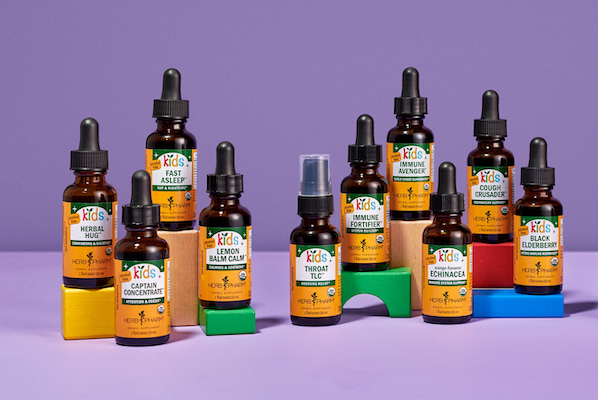
• Example - A collaborator is creating a post about our Kids Immune Avenger. In their video they say verbally how much they love giving this formula to support their kid's immune system. They also show the bottle next to their kid while their kid is blowing their nose and has a thermometer in their mouth. This is not approved because:
○ Even though the verbal claim they made is approved (since our Kids Immune Avenger has an approved S/F claim for immune system support) - the visually implied claims (i.e. - their kid being very obviously sick in the video, which could imply cold, flu, or another disease/health condition) are not approved since we cannot make any disease claims (implied or direct) and the approved immune claims for this product have to be less specific/more general.
○ SOLUTION: This collaborator can keep the same audio (since they only used approved claims verbally) but record a new video showing them giving our Kids Immune Avenger to their kid in their everyday life, such as before going to school for the day (instead of while they are actively sick).
Always Follow Suggested Use Guidelines
Whenever talking or writing about an Herb Pharm product, it's important to always follow the Suggested Use on the label - both verbally and visually (when applicable). We can never recommend off label use for any of our products.
• Example - A collaborator is creating a post about our Kava tincture. The Suggested Use directions on the label say to “add 1 squeeze of the dropper bulb to 2 oz. of water or juice, 2 to 5 times per day”. In the collaborator’s video, they talk about how they like “doubling up” and taking 2 servings at once to make their mocktail drink “extra strong”. This is not approved because this would be considered recommending off label use.
○ SOLUTION: Collaborator should make their mocktail recipe video around using only 1 serving of Kava extract, following the Suggested Use guidelines.
• Example - A collaborator is creating a post about our Mushroom Wellness Reishi capsules. The Suggested Use directions on the label say “take 3 capsules, 1 or 2 times per day”. In the collaborator's video they talk about how they prefer “opening up” the Reishi capsule shell and pouring out the powder into their coffee. This is not approved because this would be considered recommending off label use (capsules are intended to be swallowed whole).
○ SOLUTION: Instead, collaborator can show them taking the 3 capsules whole alongside their coffee, talking about how they enjoy this morning ritual/routine, etc. - following the Suggested Use on the label
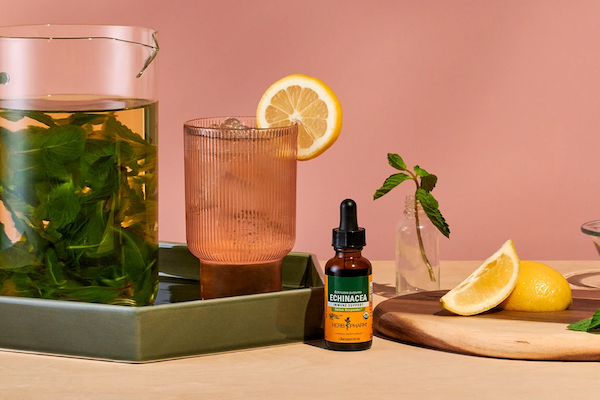
• Example - A collaborator is creating a post about our Echinacea tincture. The Suggested Use directions on the label say “add 1 squeeze of the dropper bulb to 2 oz. of water or juice, 2 to 5 times per day”. In the collaborator’s video, they want to talk about how much they love using our Echinacea tincture both internally and externally (topically). This is not approved because this would be considered recommending off label use (this product is only intended to be taken internally as a dietary supplement, not used topically as a cosmetic).
○ SOLUTION: Collaborator omits the mention of using our Echinacea tincture topically and only talks about using it internally in their video - following the Suggested Use on the label.
Topical Products
While the majority of Herb Pharm's products are internal use products (aka dietary supplements), we do also offer a handful of topical use products which are considered “cosmetics”. These products are subject to a different set of regulations, and we are not allowed to make any structure function claims about our topical products - whether that be verbal, written, or visually implied in a photo or video.
Just as our dietary supplements fall under DSHEA regulation, topical products fall under a different law, the Modernization of Cosmetic Regulation Act of 2022, or MoCRA.
In the eyes of the FDA, “cosmetics” are defined as “articles intended to be rubbed, poured, sprinkled, or sprayed on, introduced into or otherwise applied to the human body for cleansing, beautifying, promoting attractiveness, or altering the appearance.”
• Whenever we talk about a topical product, we can only talk about it in the context of the definition above, without making any health claims.
You can learn more about MoCRA by reading the official MoCRA document that was provided to you.
• Example - A collaborator is creating a post about our Calendula Oil and wants to share how much they love using it topically for their “eczema”. This is not approved because “eczema” is a disease state and we cannot make any health claims about our topical products. Additionally, “eczema” is a disease/health condition which would not be approved when talking about our internal-use dietary supplement products either.
○ SOLUTION: Collaborator focuses their post around other aspects of our Calendula Oil that they like (ex - that it is Certified Organic, moisturizing, a lovely daily ritual, etc.) - instead of making any unapproved health claims.
Disclosures
As communicated in your contract agreement as well, Herb Pharm influencers and collaborators must use the FDA disclosure on all content where a claim is made (or if a label claim is visible in the content created).
*These statements have not been evaluated by the FDA. This product is not intended to diagnose, treat, cure, or prevent any disease.
• Any written paragraph or caption overlay (for videos) where a claim is made, an asterisk * is needed at the end. This asterisk then connects to the required FDA disclaimer.
Closing Summary
Reminder: the FTC can go after BOTH the brand and the collaborator if any of the parameters outlined in this training are not followed.
Thank you for taking the time to complete this training. We provide this information to help ensure an easy and harmonious partnership throughout the duration that you are collaborating with Herb Pharm.
Updated 05/13/2026
