





Ask an HerbalistFeb 2, 2022
What's the difference between glycerin and alcohol in herbal extracts?
We love talking about herbs and herbalism, and we especially love answering your questions about those topics. That's why we brought in our team of herbal experts to respond to some of the most common questions and concerns we hear.
Our herbalists have decades of combined experience working with herbs — and the people who take them. They answer your most pressing questions, in our regular column “Ask an Herbalist.”
What's the difference between glycerin and alcohol in herbal extracts?
Alcohol, or more specifically ethanol, has a broader extraction range than glycerin. It can be diluted with 3 parts of water and used to capture a more water-soluble phytochemical profile. Diluted with 1 part of water or less it can be used to extract an alcohol-soluble (also known as oil-soluble) profile from the herb. This becomes particularly important when extracting resins, essential oils, some alkaloids and a host of other predominantly alcohol-soluble compounds.
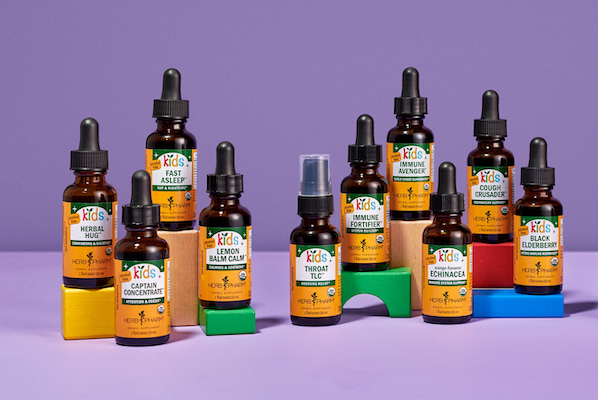
Glycerin extracts capture a narrower range of phytochemicals that lie in the mid range between alcohol-soluble and water-soluble. Finished glycerin extracts must be at least 55% glycerin for effective preservation, which further limits glycerin's flexibility. For the herbs where glycerin is an effective extractive medium, the advantage is an alcohol-free extract. Alcohol-free glycerites are particularly suited to kids and to adults with alcohol sensitivity, including recovering alcoholics.


