





You’re about to visit an external website. This resource is provided for informational purposes only and does not constitute an endorsement.
Select CONTINUE to proceed, or close this window to return to Herb Pharm.


Thyme for BusinessApr 27, 2026
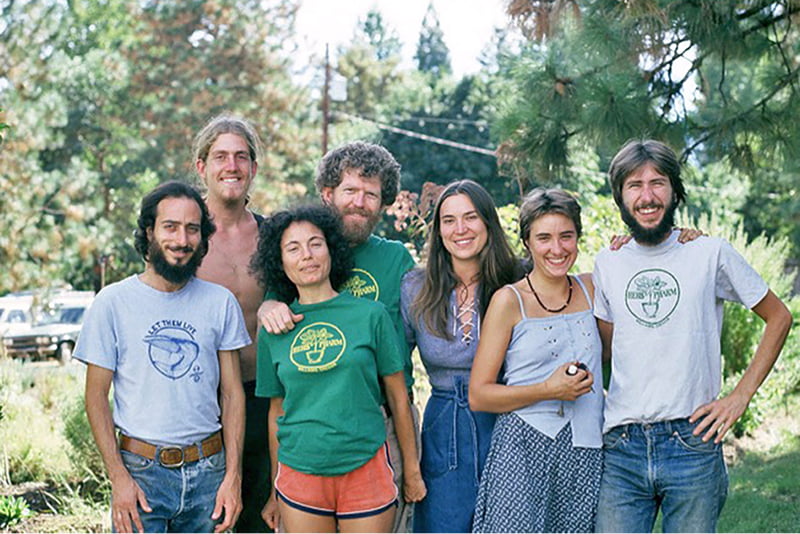
To Herb Pharm co-founder Sara Katz, herbalism is more than just a career. It's a way of life. Sara has spent decades immersed in the world of plants. From her earliest days foraging wild herbs to playing a role in shaping the herbal industry, her journey has been filled with passion, learning, and a deep respect for nature. In this interview, she shares insights into her experiences, inspirations, and hopes for the future of herbalism.
I grew up in a very urban environment, south Florida, but when I was 22, following a yearning to live in nature, I caretook a farm in West Virginia and I began picking wild plants to sell to the local co-op. Dandelion, Yellow Dock, Plantain, Horehound…It seemed whenever I used herbs I experienced remarkable change!
I've collected so much wild St John's Wort in my day, always delighted by those bright flowers, the particular shade of golden yellow, the magic of the red juice inside, the tiny glands in the leaves that look like perforations when held to the sun. And SJW is useful and effective in so many ways.
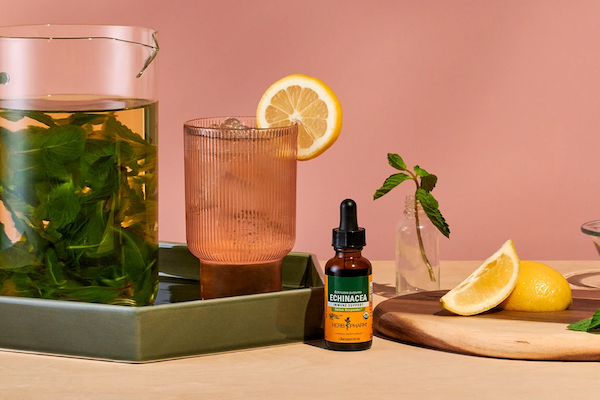
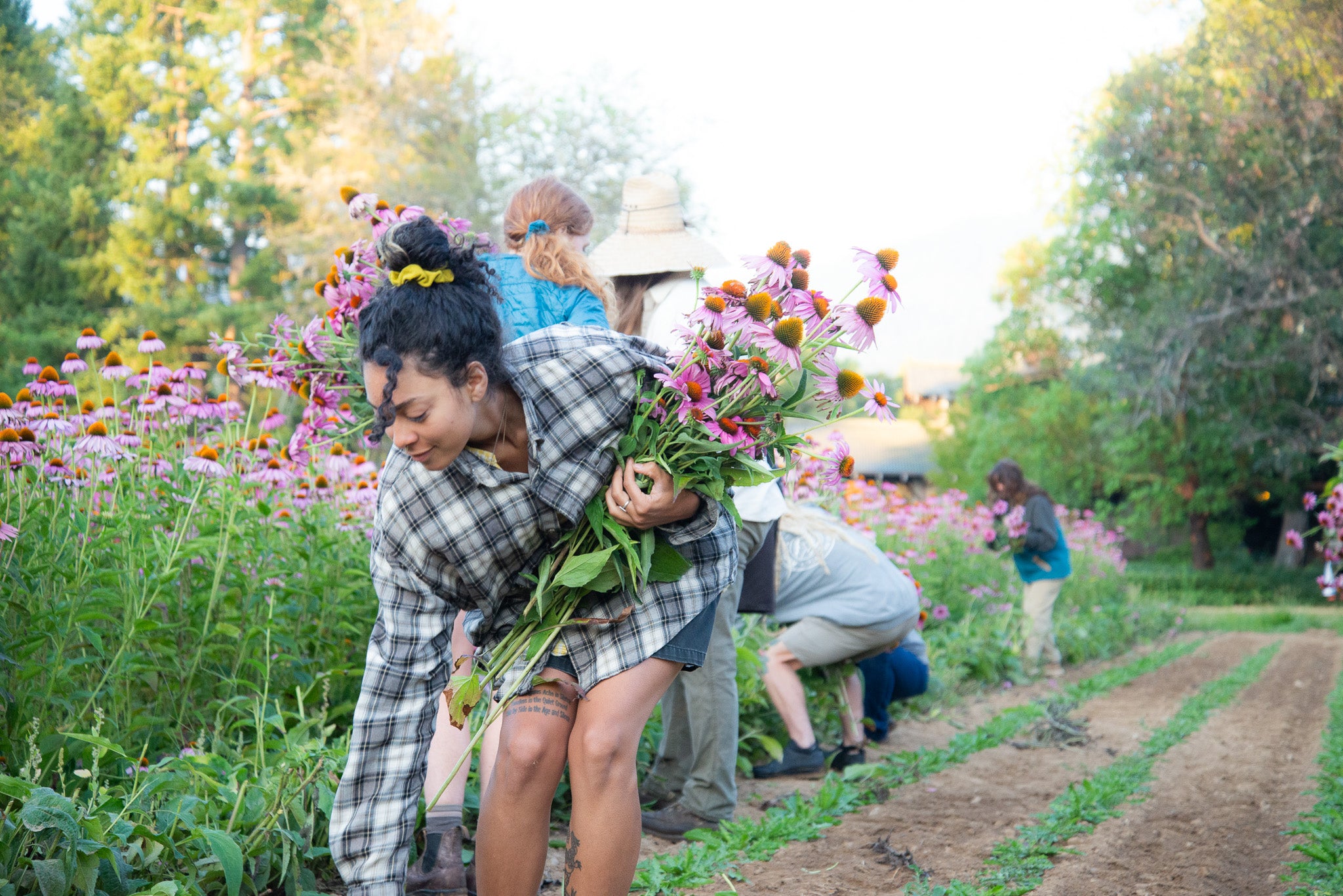
Echinacea is a gift of the American Prairie. And it is one of the first herbs I learned to use for any thing related to the immune system. In the late 1970's, when we were just starting to make tinctures, we were selling Echinacea tincture made...in Switzerland, because we couldn't get any other Echinacea root. I remember when we first got our hands on Echinacea seed and gave some to Mark Wheeler, founder of Pacific Botanicals, to grow some for us and after a couple of years we were able to make tincture out of our own local, organically-grown Echinacea roots. That was very exciting. And then a few years later, reading the extensive research on this plant in Germany, Ed had the idea to make separate tinctures of the seed, the root, and the leaf and flower, to capture the wide spectrum of known Echinacea constituents each part harvested at their peak, and combine them to make Super Echinacea®, which was our flagship product for decades.*
I always keep Herb Pharm's Soothing Throat Spray in my travel kit. At the first tickle of a sore throat I begin spraying, and always find comfort and abatement.*
Honestly Ed Smith was my earliest herbal mentor. He had the most amazing way of understanding and explaining the action of herbs in the body. His curiosity and enthusiasm were infectious and I became totally enraptured. Rosemary Gladstar was another early and important mentor, and through her gatherings of herbalists I was exposed to many colorful and brilliant herbalists. Another early mentor of mine was Christopher Hobbs. Christopher's enthusiasm for plants is utterly contagious, and we spent many, many hours botanizing in every kind of environment on the west coast.
Rosemary Gladstar has been a lifetime inspiration in her way of leading with kindness and inclusion. Both Rosemary and Cascade Anderson-Geller inspired me with their deep personal understanding of how to use medicinal plants.
Medicinal plants have largely been the domain of women, the tenders of home, hearth and garden. The realm of industry has a more male dominance. I see the opportunity for women to shine light on the beauty, gentleness, and deep traditions of using medicinal plants for healthcare. While the science of constituents is important and fascinating, we need to not lose sight of the magic and intuition that isn't necessarily measurable in the lab.
The part of the industry that I have mostly lived in has not so much been the business/industry side, but rather the purely herbal side, where I have interacted with people who are hugely passionate about medicinal plants. While this plant realm is available equally to men and women, herbalism has long been the domain and practice of women, and is a realm where I have always felt at home and purposeful. I think that other than making my way through the challenges and power dynamics of running a home business with my husband, that my experience as a woman in business has not changed so much over the years, but certainly my experience as a human has!
I've always considered myself a student of and servant for the medicinal plants. That has not changed. I admit I've never felt like 'the industry' is my community. My community has been the plants and the herbalists. I have huge respect for and served on the board of the American Herbal Products Association (AHPA), the industry's trade organization that has taken significant actions to keep medicinal plants legal and available. However, my focus has been much more on organizations like United Plant Savers, which works to protect native populations of plants, and the Sustainable Herbs Initiative, which works to bring awareness and resources such that wild-harvesters and growers can make a living wage while operating under sustainable guidelines.
Our challenges were mostly on the pure business side. Collecting wild plants, working with wildcrafters around the country, traveling the world looking for authentic sources of plants, making tinctures…that was all rather fun and easy. We didn't have nearly as much passion or prowess when it came to marketing and strategizing. I remember the first time we heard a competitor bought our products off of store shelves in a deal to take our shelf space. We thought that was about the rudest move ever! We managed to survive and even thrive despite our weakness in making business deals, and we were pretty thrilled after 34 years of bumbling along that we were able to hand over that part of the business to someone else.
The moment that occurs to me of recognizing our 'success', which crept up on us more than it was a goal, was on our first flight to Europe to attend Herbora, an herbal trade show in Verona, Italy. We then visited Bioforce of Switzerland, which had been an idealized tincture business model for us. We were so inspired and felt so gifted by the whole experience, we decided on the flight home to give all of our employees a raise.
I surely never saw the past 47 years evolving as it has, since Ed and I never set out to create such a robust business, and we have been forging the wilderness every step of the way. Herb Pharm was created out of passion and purpose. I am very gratified that after 47 years those ethos are thriving and adapting to the times.
I would like to see Herb Pharm continue to lead the way in realizing business success by doing what is good for plants, people, and planet. I would like to see that Herb Pharm maintains its commitment to the roots of herbalism, to doing whatever we can to protect wild populations of medicinal plants, and to running our business in such a way that herbalists continue to hold our company in high esteem.
My favorite thing about Herb Pharm is our commitment to respecting and honoring medicinal plants and traditional herbalism, and our efforts to create a workplace that feels like a community, as herbalism is so much about community.
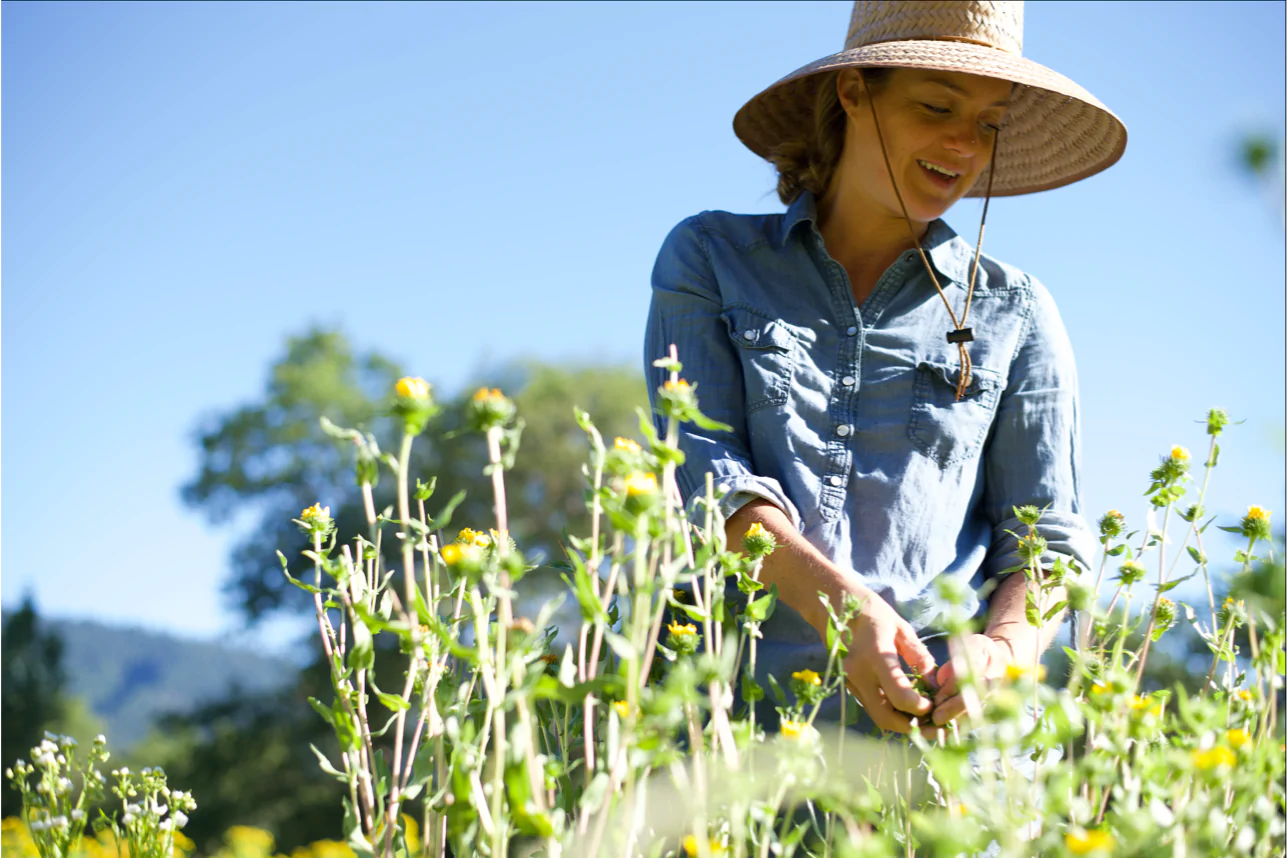
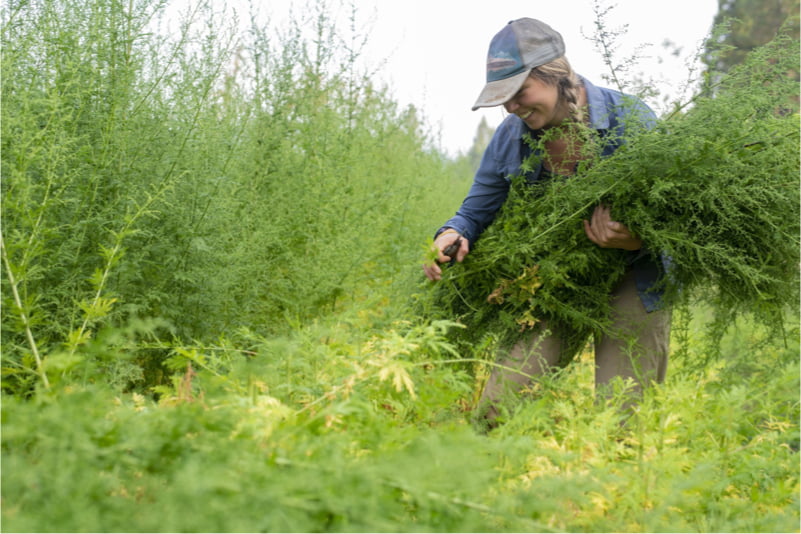
Collecting Milk Thistle on the coast. I always loved wildcrafting and spent a lot of time doing that, collecting Mullein flowers, St. Johns's Wort, Shepherd's Purse, Pipsissewa, and on and on. But one of my favorite wildcrafting expeditions was annual trips to the Oregon coast to collect Milk Thistle seeds from farmer's fields on bluffs overlooking the Pacific Ocean. Our trip to Fiji to meet with Kava growers and do a traditional Kava ceremony was colorfully memorable. And finding Eyebright with our Italian herb collector friends high in the Italian Alps was a favorite memory. One more…those wonderful herbal conferences, gatherings of like-minded souls sharing ceremony, song and learning, were the fabric of my world.
My experience is that herbalism by its nature offers a level playing field where women are respected as historical bearers of the knowledge. That said, for a few decades it seemed that many of the herb teachers were men and the students were women. I think that has changed. I think herbalism remains the provenance of women, though many male herbalists also have deep understandings, are good teachers, have written excellent books, and led efforts to support credible herbalism. I think Women's Herb Conferences have been a strong source of encouragement and empowerment for women to own their understandings, hone their skills. In my particular situation of sitting on the Herb Pharm board, which has largely been made up by men, most of them have a background in business vs plants. In that group I feel that my voice as someone speaking for Herb Pharm's values around plants and people is highly respected and listened to. So I don't notice the gender discrepancy as a problem, but rather as an opportunity to keep the company's focus on our values and mission.
Ah, legacy! I am thrilled to have the opportunity to think of preserving one! I believe my contribution has been that of helping to bring high quality medicinal plants to people and industry, while balancing profit and purpose. Herb Pharm has been the perch upon which my legacy stands, so preserving my legacy means preserving Herb Pharm's legacy, and I see that being done through intention and action, through maintaining leadership roles in important herbal organizations like AHPA, American Botanical Council, and United Plant Savers, through our work in regenerative agriculture and the Sustainable Herbs Initiative. Herbalism is a community effort, and I hope that Herb Pharm continues to play a leading role in this community both by actions and example, and by supporting various organizations and community that further our understanding and appropriate use of medicinal plants.
Don't forget! Check your Rewards account for coupons.
CHECKOUT
You’re about to visit an external website. This resource is provided for informational purposes only and does not constitute an endorsement.
Select CONTINUE to proceed, or close this window to return to Herb Pharm.